
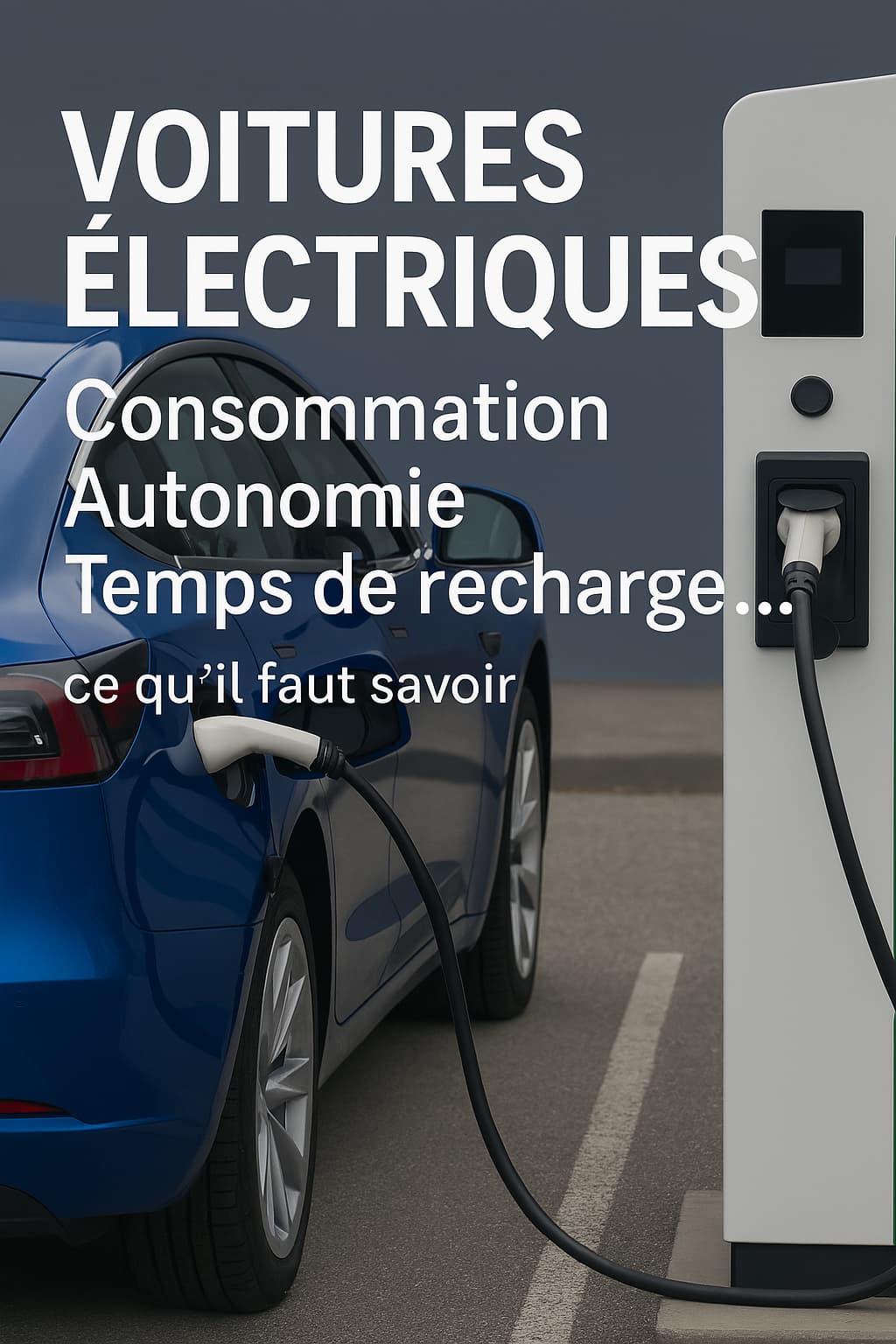
Electricity consumption: a matter of kWh/100 km
Unlike combustion cars, whose consumption is expressed in litres per 100 km, electric vehicles show their consumption in kWh/100 km. A compact car uses 13 to 18 kWh/100 km on average, while an electric SUV can exceed 20 kWh/100 km.
Consumption depends on many factors: vehicle weight, outside temperature, speed, driving style, use of air conditioning or heating.
How much does 100 km cost in an electric car?
At home, the cost is generally under €3 per 100 km (depending on your electricity contract). At a public fast-charging point, the cost can climb to €7 or €8, or even more.
On average, an electric car remains 50 to 70% cheaper to run than a combustion vehicle for everyday trips.
Charging time: highly variable
There are three levels of charging:
- Household socket (2.3 kW): 20 to 30 hours for a full battery
- Wall box or public AC charger (7 to 22 kW): 4 to 10 hours depending on power
- DC fast charger (50 to 350 kW): 20 to 45 minutes for 80%
Charging time depends on the battery capacity and the type of charger. Fast charging is ideal for long journeys, slow charging is perfect overnight at home.
Range: where do we really stand?
Recent models show between 300 and 550 km of real-world range, in mixed-cycle driving. In winter, range can drop by 20 to 30% because of heating and weather conditions.
For long journeys, high-end models such as the Tesla Model Y or the Hyundai Ioniq 6 offer enough range to drive without stress, with well-placed charging stops.
Good practices to optimise consumption
- Drive smoothly and anticipate braking (regenerative braking)
- Keep tyres properly inflated
- Reduce your speed on the motorway (huge impact on an electric car)
- Schedule charging at night or during off-peak hours
Comparison with fossil fuels
Over 100 km, a combustion car uses between 6 and 8 L of petrol or diesel, i.e. €10 to €13 at the very least. In an electric car, the average cost is €2 to €4, for equivalent or even better performance in acceleration.
The savings are all the greater if you charge at home on an off-peak tariff, or even with solar panels.
An unbeatable running cost
Electric cars are very efficient to run, quiet, economical, and well suited to daily trips. Although their purchase price remains high, the savings on fuel, maintenance and charging make them an increasingly relevant choice… especially with the rise in conventional fuel prices.