
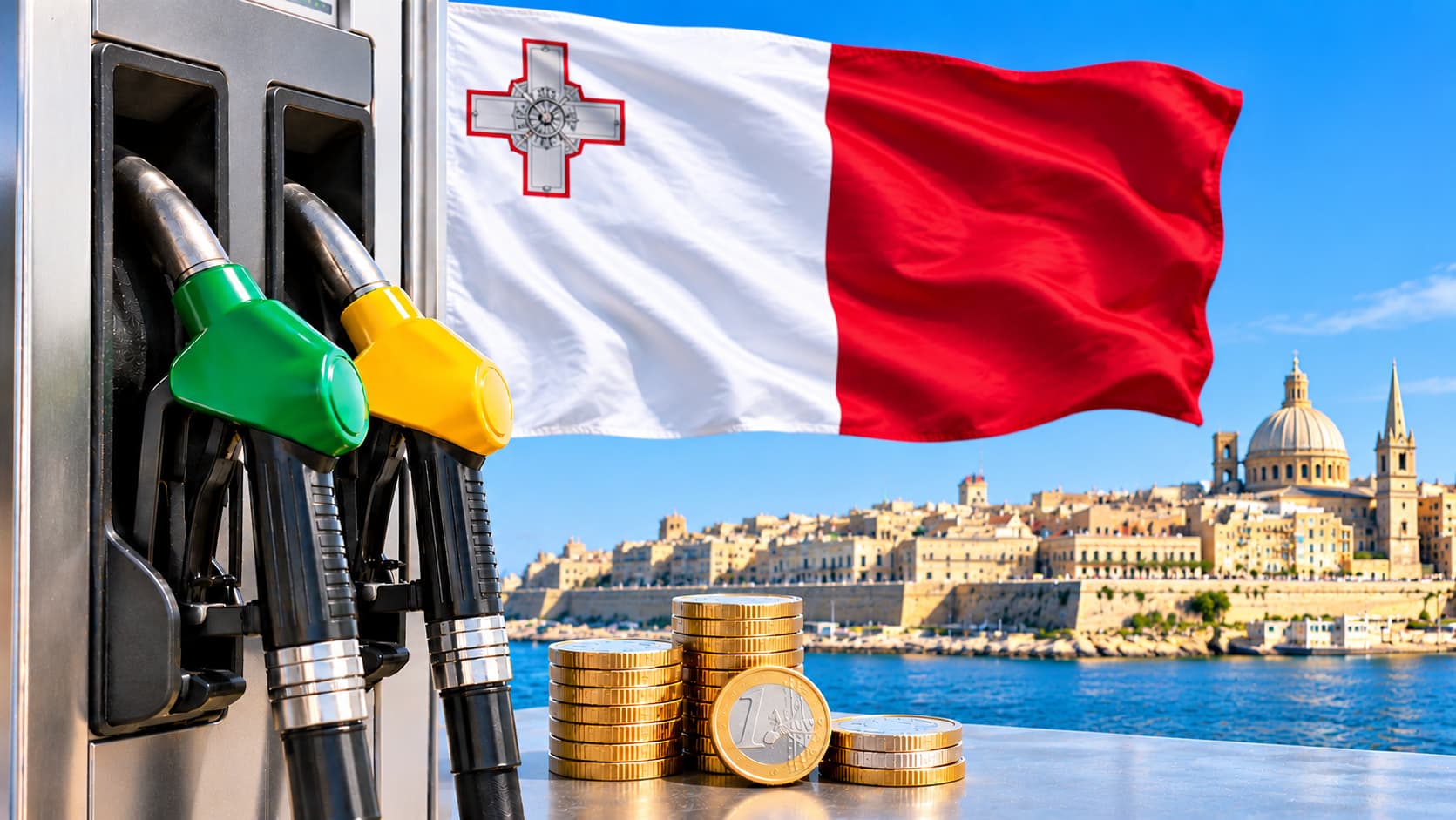
In Malta, pump prices have not moved: €1.34 per litre for petrol and €1.21 per litre for diesel, the lowest of the 27 European Union countries according to the Commission's oil bulletin. The government maintains these prices through subsidies, which it renewed in the 2027 budget presented on 26 October 2026: about €400 million for energy and fuel.
Subsidies rather than a tax cut
According to the news site BusinessNow.mt, energy subsidies, introduced in 2022, keep pump prices artificially low. The newspaper Politis adds that the State strongly supports Enemed, the state-owned company responsible for importing, distributing and wholesaling fuels, which makes it possible to keep prices fixed.
On 9 March 2026, in Parliament, Prime Minister Robert Abela said that, without intervention, fuel would have risen by 38 cents per litre for petrol and 45 cents per litre for diesel. According to MaltaDaily, a barrel of oil was then above 100 dollars, at times close to 120, after the recent closure of the Strait of Hormuz.
What the subsidies cost
The amounts quoted cover energy as a whole: MaltaToday specifies that the €400 million envelope for 2027 is used to subsidise fuels, electricity and household gas. Energy subsidy spending has evolved as follows:
- 2022: about €350 million, the peak;
- 2023: €580 million budgeted, just over €227 million actually spent;
- 2024: about €320 million;
- 2025: €152 million budgeted;
- 2026: about €392 million, according to the budget speech;
- 2027: about €400 million planned.
The budget sets the amounts on the basis of oil price forecasts, and the final cost also depends on the hedging agreements concluded by Enemalta and Enemed, the public fuel importer.
The diesel bill rising in 2026
On 14 September 2026, according to the ITALPRESS/MNA agency, Finance Minister Clyde Caruana said that the diesel subsidy for 2026 was now estimated at about €75 million, against €30 million forecast about three months earlier. He said that the continuing rise in diesel prices left the government with "no end in sight" for the burden of subsidies.
The government had set aside a €250 million buffer fund at the start of the year for energy subsidies, and it maintains its public deficit target of below 3% of GDP. According to the budget speech, the deficit stands at 2.6% of GDP in 2026 and is forecast at 2.6% in 2027.
A fee on pleasure boats
To recover part of the cost of fuel subsidies, the 2027 budget provides for an increase in annual registration fees for pleasure boats from 10 to under 24 metres. It ranges from €300 for boats from 10 to under 12 metres to €2,600 for those from 21 to under 24 metres. Professional fishermen and boats under 10 metres are exempt, and the measure is expected to raise about €3 million.
These measures are budget announcements, not yet laws: as of 1 November 2026, no implementing text covered them.
The prices recorded by the Commission
According to the European Commission's oil bulletin, which we publish on our Europe fuel prices page, updated on 16 November 2026, petrol is at €1.340 per litre in Malta and diesel at €1.210 per litre, ranking first of the 27 countries for both fuels. Malta's prices show no change on the page.
The European Union average is €1.829 per litre for petrol and €2.050 per litre for diesel, i.e. 48.9 cents and 84.0 cents more than in Malta. The highest price is €2.364 for petrol (Denmark) and €2.564 for diesel (Finland), i.e. 102.4 cents and 135.4 cents more than in Malta. In Malta, diesel is 13 cents cheaper than petrol, whereas in the Union it is on average 22.1 cents more expensive.
Among the Mediterranean neighbours, Italy shows €1.970 for petrol and €2.210 for diesel, Greece €1.969 and €2.038, and Cyprus €1.625 and €1.986. To compare with the other countries that have acted on prices or taxes, you can read our (French-language) overview of how European countries are reacting.