
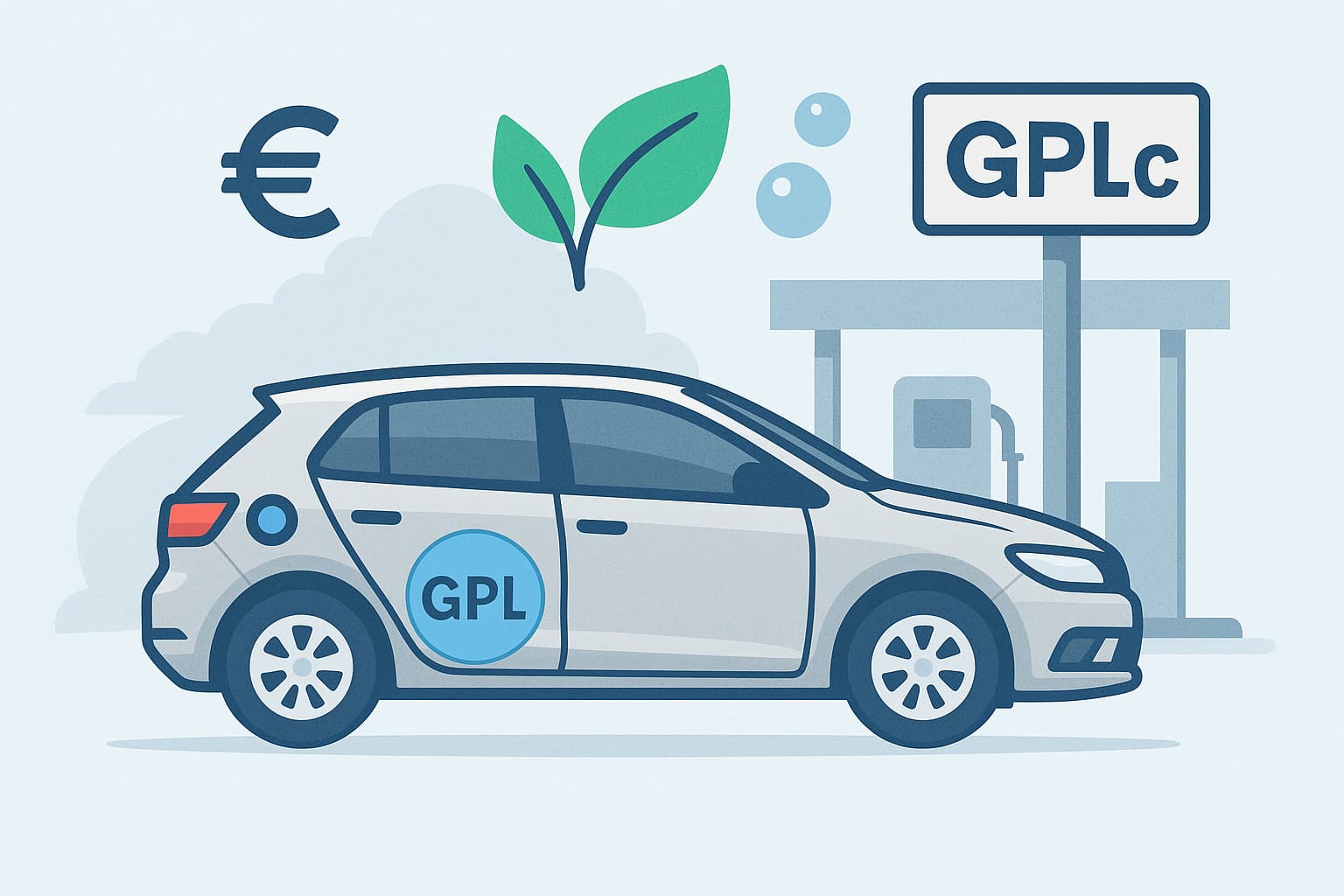
LPG, or Liquefied Petroleum Gas used as a fuel (known as GPLc in France), is an alternative fuel that is still little known but appeals to a growing number of drivers looking for a cheaper and cleaner fuel. It should not be confused with CNG.
What is LPG?
LPG is a mixture of butane and propane stored under pressure in liquid form. It is used as a fuel for petrol vehicles that have been modified or designed to run on LPG.
- A gas in its natural state
- Stored as a liquid in a dedicated tank
- Injected through a dedicated system, separate from the petrol circuit
In LPG mode, a petrol vehicle switches automatically to gas supply, and can go back to petrol at any time.
Advantages of LPG
- Lower CO₂ and particulate emissions than petrol or diesel
- Quieter operation
How it works and conversion
- Some vehicles are sold LPG-ready from the factory (e.g. Dacia ECO-G)
- Others can be converted with an LPG kit
- The LPG tank is usually placed in the boot (in place of the spare wheel)
An LPG vehicle keeps its petrol tank: the range is doubled, which suits long journeys.
Drawbacks of LPG
- Conversion is costly to install
- Loss of boot space
- Fewer stations offer LPG than petrol
Safety
LPG is very safe, but it requires an approved installation and rigorous maintenance.
GPLc in France
In France, the average price of GPLc was €1.033 per litre in the week of 28 September to 4 October 2026.
An LPG conversion kit costs between €2,000 and €3,000.
About 1,600 stations offer LPG in France, against more than 10,000 for petrol.
LPG vehicles are subject to a specific annual technical inspection, some underground car parks still ban LPG vehicles not fitted with safety valves, and a “GPL” label is mandatory on the windscreen. Some regions also offer an ecological bonus or free vehicle registration.
The list of GPLc stations helps you find the nearest one.