
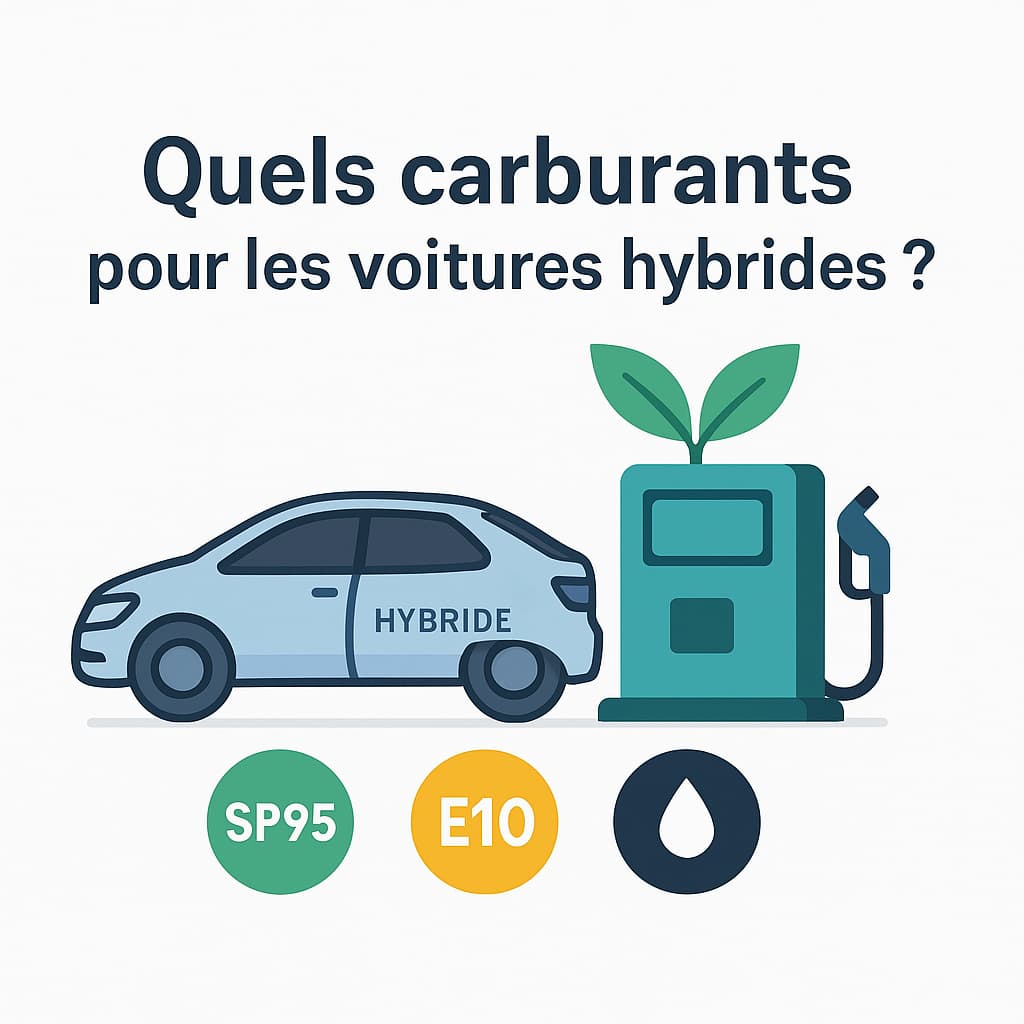
Hybrid cars, whether conventional or plug-in, use both a combustion engine and an electric motor. But when it comes to fuel, which is the most suitable? Can you use E10 or E85? Here is a guide according to your type of hybrid.
Hybrid vs plug-in hybrid: the difference
- Conventional hybrid: battery that recharges while driving (Toyota, Honda…)
- Plug-in hybrid (PHEV): larger battery, recharged from a mains socket
Which fuel for a petrol hybrid car?
Most hybrids sold in France run on an E10-compatible petrol engine.
- ✔️ SP95-E10 = recommended for most models
- ✔️ SP95 or SP98 = also possible (often more expensive)
- ❌ E85 = only if the vehicle is FlexFuel or converted
Most hybrids are designed for SP95-E10. It is therefore the economical and practical choice.
Can you run a hybrid on E85?
E85 is not compatible as standard with hybrid vehicles, except in specific cases:
- ✅ FlexFuel hybrid (rare)
- ✅ Conversion with an approved kit (on a petrol engine)
- ❌ Risk of damage if used without conversion
⚠️ E85 must not be used without a kit, even on a petrol hybrid.
And diesel hybrids?
Some older models (e.g. Peugeot 3008 Hybrid4) used a diesel engine, but manufacturers have largely abandoned this choice.
- ❌ No new diesel hybrid left on the market in 2024
- ✔️ Standard diesel for existing models
Which fuel uses the least in a hybrid?
The most “economical” fuel depends on how you use the car:
- Short urban trips → the electric motor takes over
- Long trips → the combustion engine uses more
- SP95-E10 remains the best price/performance compromise
If you drive a hybrid:
- Use SP95-E10 (recommended by manufacturers)
- SP98 works but costs more
- E85 can only be used after conversion
Compare the price of fuels compatible with your hybrid on our fuel map.