
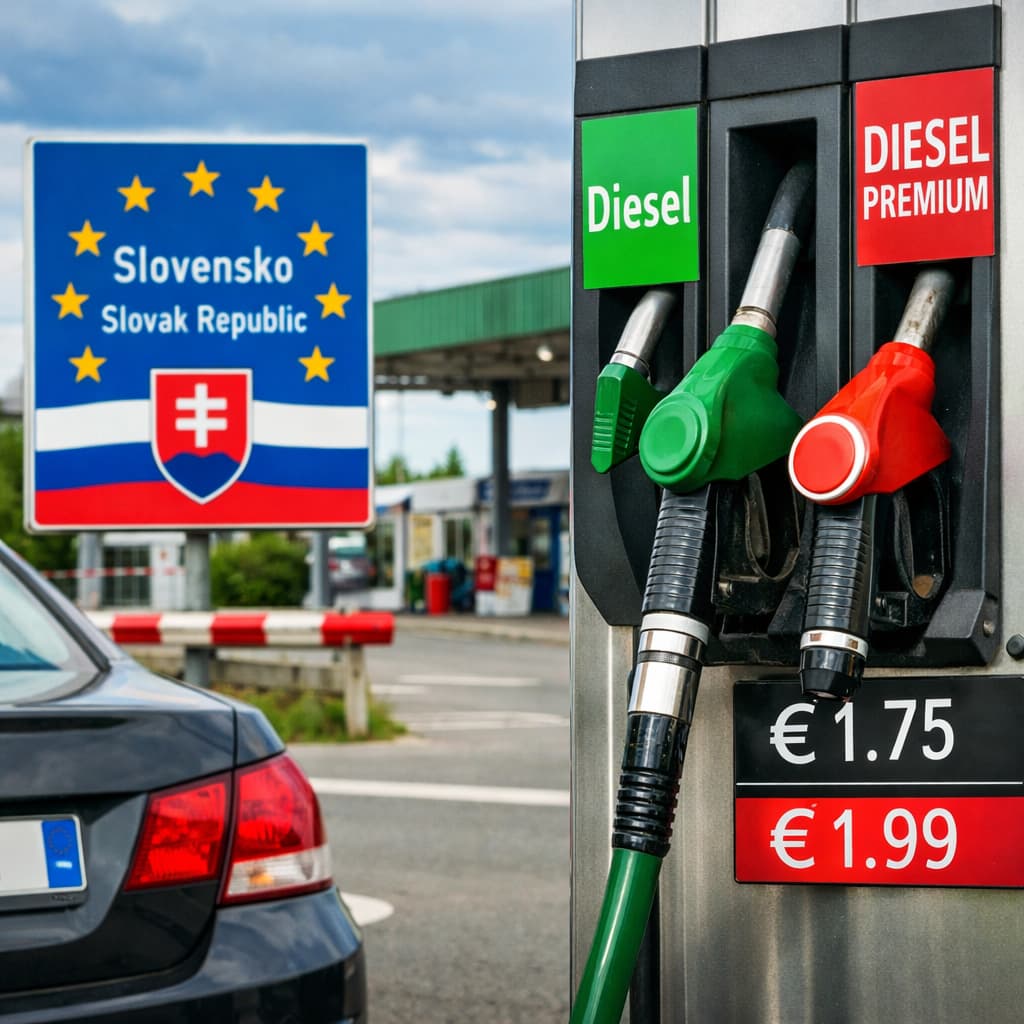
Slovakia has introduced an exceptional measure in the fuel market. The government has approved a resolution allowing fuel stations to increase diesel prices for foreign-registered vehicles and limit sales volumes, in order to curb fuel tourism and protect domestic supply.
This measure applies only to diesel. It comes as the country seeks to secure its energy supplies in a context marked by rising global prices and disruptions to Russian crude oil flows via the Druzhba pipeline. For motorists and transport companies, this situation once again highlights how quickly market conditions can change across European countries.
Sales limits to prevent shortages
According to reports from Reuters and Zonebourse, Slovak fuel stations are now allowed to limit diesel sales to a full tank plus an additional 10 litres. Exports are also restricted. The government aims to prevent stations located near borders from being rapidly depleted by foreign drivers seeking lower prices.
Prime Minister Robert Fico stated that several dozen stations in northern Slovakia had run out of fuel due to high demand from Poland. The measure is therefore intended as a temporary regulatory tool in a context of tight supply and pressure on fuel stocks.
Different pricing for foreign vehicles
The resolution also allows diesel prices for foreign vehicles to be set differently. The pricing reference is based on the average diesel prices observed in three neighbouring countries: the Czech Republic, Austria and Poland. This provision aims to reduce the price attractiveness of the Slovak market for non-resident drivers.
The measure is planned for a duration of 30 days and does not apply to petrol. It illustrates how some European countries are willing to intervene directly in fuel sales conditions when supply becomes uncertain.
A European market under pressure from geopolitical tensions
The situation remains particularly tense in Europe. The conflict involving the United States, Israel and Iran is putting pressure on energy markets, while disruptions around the Druzhba pipeline are complicating crude oil supplies for several Central European countries. According to the cited report, around one quarter of diesel exports passing through the Strait of Hormuz last year were destined for Europe.
In this context, Slovakia is not an isolated case. Other European countries have already taken measures to cushion the impact on consumers or their domestic markets. To track price differences between countries, it is useful to consult fuel prices across Europe, which allows comparisons between neighbouring markets.
This Slovak decision highlights how price differences between countries can trigger significant cross-border movements of drivers, especially when price gaps become substantial. For motorists travelling across Central Europe, diesel purchasing conditions may therefore change rapidly, not only in terms of price but also in available volumes.